

The January 2 Hashtag Event Was Another SnyderVerse Bust!
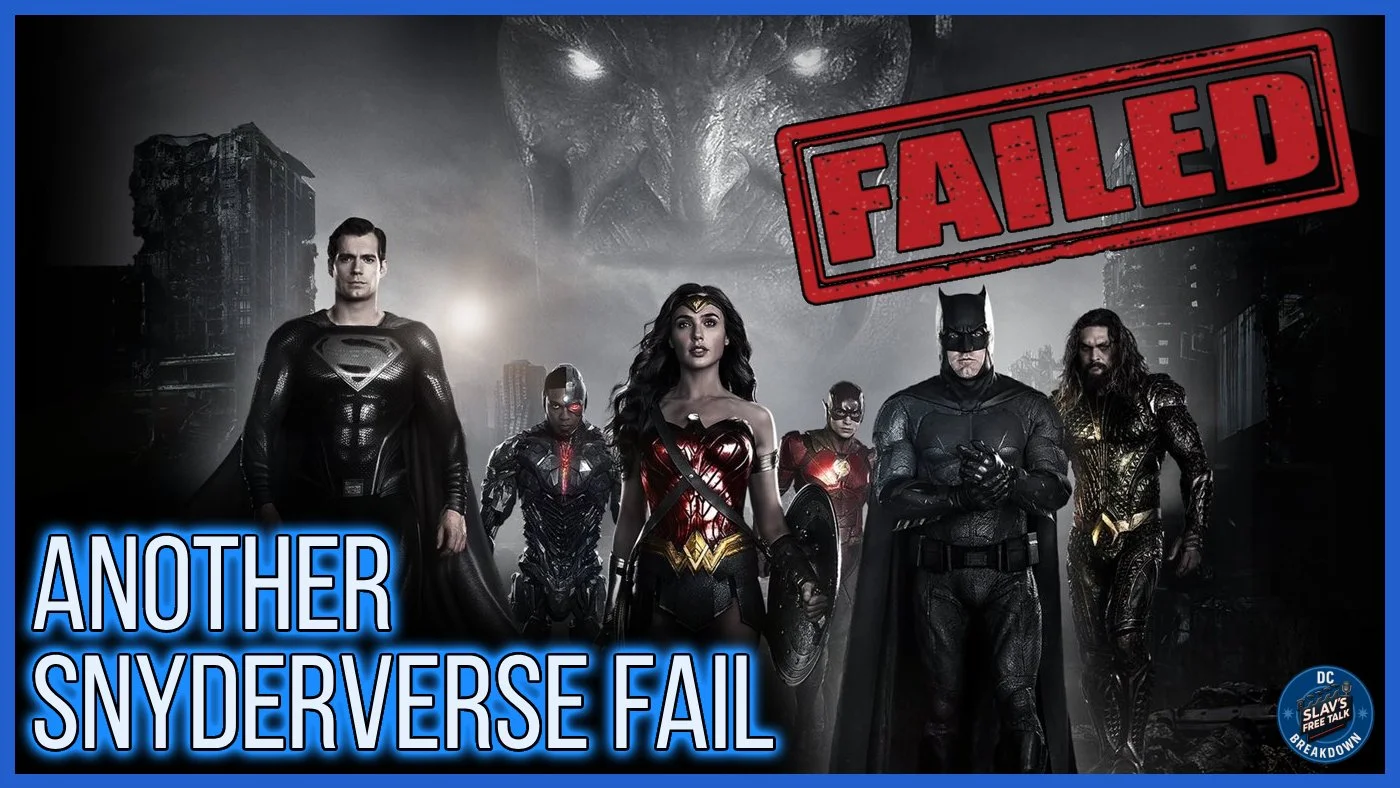
Another hashtag event. Another promise of momentum. Another thud.
On January 2, yet another SnyderVerse driven hashtag campaign tried to push the idea that restoring the SnyderVerse is simple, clean, and easily achievable. It wasn’t. And the lack of traction made that painfully obvious.
Maybe the most hilarious aspect of this latest event was the ask.
A post claiming the SnyderVerse saga is “easy” to complete was making it’s social media rounds during the event and we couldn’t help but take notice.
According to this plan, Warner Bros just needs to follow a “few” basic steps and everything magically falls into place.
Release Man of Steel, Batman v Superman Ultimate Edition, and Zack Snyder’s Justice League back into theaters. Release the Ayer Cut of Suicide Squad. Let David Ayer film additional scenes. Make Ben Affleck’s Batman movie. Then shoot Justice League 2 and 3 back to back. After that, if they feel like it, make Man of Steel 2 and then reboot everything with Flashpoint.
That’s the pitch. That’s the “easy” solution.
And that’s where the entire thing collapses under the slightest bit of scrutiny.
Let’s be blunt. Re-releasing old films into theaters is not some guaranteed revenue play. The Ultimate Edition of Batman v Superman and Zack Snyder’s Justice League were niche releases even within the fanbase. Pretending that audiences would suddenly flood theaters years later ignores reality, market conditions, and basic audience behavior. Studios do not greenlight projects based on nostalgia math and Twitter enthusiasm.
Then there’s the Ayer Cut argument. Even within Snyder aligned spaces, this has never been a unified ask. Adding more money to film new scenes for a director whose film was heavily reworked by the studio nearly a decade ago is not a “fix.” It’s a new production expense with no proven upside.
From there, the proposal jumps straight into Batfleck leading into Justice League 2 and 3. No discussion of contracts. No discussion of actor interest. No discussion of scheduling. No discussion of whether the studio wants to reopen a closed chapter. Just “make it.”
And this is where the financial reality completely nukes the fantasy.
Even being conservative, you are talking about roughly 600 to 800 million dollars in production costs alone. That does not include marketing. That does not include distribution. This idea treats nearly a billion dollars like pocket change.
Then comes the most baffling part. After spending all that money, the plan ends with rebooting everything anyway.
So the studio is supposed to invest close to a billion dollars to conclude a universe, only to immediately wipe it out. That is not strategy. That is fan fiction budgeting.
What makes this even worse is that the plan doesn’t stop there. The same list casually tosses in Wonder Woman 3, a Flash project, Cyborg, Deathstroke, Atom, Suicide Squad follow ups, and Green Lantern. It’s an entire cinematic slate waved off with a shrug, as if studios operate on vibes instead of balance sheets.
This is why these hashtag events keep failing.
Not because fans lack passion, but because the messaging is fractured and unrealistic.
Some fans want Justice League 2 and 3. Others want Batfleck. Others want the Ayer Cut. Others want a full restored universe with spin offs. When everything is the ask, nothing is the ask.
Movements survive on clarity. This one refuses to simplify.
If the goal was truly to finish the Snyder story, it should have stopped at Justice League 2 and 3. Everything beyond that turns the pitch from a conclusion into a full scale reboot proposal disguised as closure.
And no executive is buying that.
What makes this almost darkly funny is that there actually is a realistic alternative that keeps getting ignored.
Animate it.
Make it a comic. Finish the story in a medium where budget constraints do not exist and audience expectations are aligned.
If a SnyderVerse continuation comic sold exceptionally well, that data could justify animation. Animation is where this universe would truly thrive anyway.
That is the ceiling. Not billion dollar theatrical gambles.
But instead, we get another hashtag event. Another bloated plan. Another insistence that studios should “just do it.”
January 2 proved once again that noise is not leverage. Engagement is not demand. And nostalgia is not a business plan.
Until the ask gets simpler, unified, and grounded in reality, these campaigns will continue to spin their wheels. Loud. Passionate. And ultimately ignored.
